

PRESENTER BIOS
All bios are listed in alphabetical order by last name
Sarah Brown, Director, Northwestern University Women’s Center
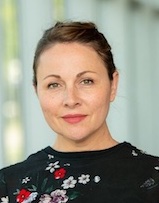
Sarah Brown is the Director of Northwestern University’s Women’s Centers on the Evanston and Chicago campuses. In this role, Dr. Brown works with Women’s Center staff and a broad range of campus partners to promote feminist education, community, and policy, and to create the conditions for imagining a more just and affirming future. Sarah’s research interests include history of medicine, specifically in mental health fields, affect theory, late twentieth century U.S. history and literature, and feminist science studies. She has developed the courses Depression and Its Discontents and Imagining the American Mind. She most frequently offers the course Feminism and Social Change in GSS, a course that is part history and theory and part practical skills for political engagement. Dr. Brown received her PhD from Brown in American Studies in 2019 and is a very proud graduate of Brooklyn College in the City University of New York. She writes for academic and creative nonfiction audiences.
Lesley-Ann Brown Henderson, Assistant Vice President and Chief of Staff, Student Affairs, Northwestern University
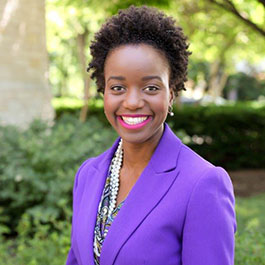
Lesley-Ann Brown-Henderson, Ph.D. (she/her/hers) is the Assistant Vice President and Chief of Staff for Student Affairs at Northwestern University. As Assistant Vice President and Chief of Staff Dr. Brown-Henderson oversees Student Affairs Marketing, Student Affairs Assessment and Planning, Student Transition Experiences, and the Office of the Vice President for Student Affairs. Additionally, she is responsible for managing VPSA communications, supporting the Student Life Committee of the Board of Trustees, coordinating the division’s fundraising efforts, and the execution of division-wide initiatives and events. Dr. Brown-Henderson has worked at Northwestern for 14 years and has been working alongside students, staff, and faculty in higher education for over 20 years. Dr. Brown-Henderson earned her bachelor’s degree in Psychology from the University of Miami, master's degrees in student Affairs Administration in Higher Education and Counseling Psychology, and her doctorate in Counseling Psychology from Texas A&M University. She lives on the South Side of Chicago, Bronzeville, with her husband, three children, and dog.
Andrew Curley, Associate Professor, School of Geography, Development & Environment, University of Arizona

Indigenous nations continue to thrive despite decades of forced removal, land dispossession, and economic underdevelopment. Within Indigenous communities, extractive industries produce a particular kind of colonizing relationship that expands social difference and creates new cultural understandings of resources. The social forces at work are neither static nor two-dimensional. They are dynamic, contradictory, and counter-intuitive. My research focuses on the everyday incorporation of Indigenous nations into colonial economies. Building on ethnographic research, my publications speak to how Indigenous communities understand coal, energy, land, water, infrastructure, and development in an era of energy transition and climate change.
Dallas Downey, Undergraduate Student, 1st year, Majors in Journalism & Art History and Minor in Native American & Indigenous Studies

Chiaanakwad (Great Cloud), also known as Dallas Downey, is an Afro-Indigenous artist, activist, and abolitionist who comes from the non-removable Mille Lacs Band of Ojibwe from Mni Sota Makoce. Born and raised in North Minneapolis, Minnesota, he comes from a rich Afro-Indigenous lineage shaped by place-based communities, such as the Anishinaabe and Gullah Geechee peoples. He is a first-year student studying Journalism & Art History, with a minor in Native American & Indigenous Studies.
Sarah Echohawk, President, Advancing Indigenous Science and Engineering Society, AISES

Sarah EchoHawk, a citizen of the Pawnee Nation of Oklahoma, has been working on behalf of Native people for over 25 years. In 2013, she was named CEO of AISES, an organization dedicated to advancing Indigenous People in STEM, and currently serves as the organization’s President. Prior to joining AISES, Ms. EchoHawk was the Executive Vice President at First Nations Development Institute. Previously, she also worked for the American Indian College Fund, and as an adjunct professor of Native American Studies at Metro State University of Denver. Ms. EchoHawk currently serves on several boards including the American Indian Policy Institute, Colorado Health Foundation, Native Ways Federation, Digital Promise, PFLAG and the Mashantucket (Western) Pequot Endowment Trust. She is a contributing author in the book, Invisible No More: Voices from Native America (2023), a groundbreaking collection of stories by Native American leaders who are leading the way through cultural grounding and nation-building in the areas of community, environmental justice, and economic justice . Ms. EchoHawk was also a contributor to the report, Transforming Trajectories for Women of Color in Tech (2022), as a member of the Committee on Addressing the Underrepresentation of Women of Color in Tech at the National Academies of Science, Engineering, and Medicine. She holds a Master of Nonprofit Management from Regis University and a Bachelor of Arts in Political Science and Native American Studies form Metro State University of Denver.
Jeff Feng, Postdoctoral Scholar, Northwestern Argonne Institute for Scientific and Engineering, Manoomin Collective

Jeff Feng is a STRONG Manoomin Collective Postdoctoral Scholar at Northwestern University. Their research and teaching focus on the intersections of climate justice and queer liberation, environmental justice, and social movements. They examine the contributions of queer, trans, and Two-Spirit activists to fighting climate injustices and analyze how power, privilege, and marginalization shape climate justice policies and movements. As a scholar-activist, they advance climate justice by researching alongside organizers, such as those in the Central Coast Climate Justice Network, and by teaching courses that pair students with environmental justice partners to complete collaborative projects. They have published in Energy Research & Social Science and AAPI Nexus and contributed to Edward Elgar’s A Research Agenda for Human Rights edited volume. In public-facing work, they have written about queering land politics for YES! Magazine and curated the online Rhizomatic Project based on interviews with queer environmental activists. They received their M.A. and Ph.D. in political science, with a doctoral emphasis in feminist studies, from the University of California, Santa Barbara, and their A.B. in environmental sciences and policy from Duke University.
Lula Fox, Undergraduate, 4th Year, Majors in Anthropology, Environmental Policy & Culture and Minors in Native American and Indigenous Studies, Global Health Studies
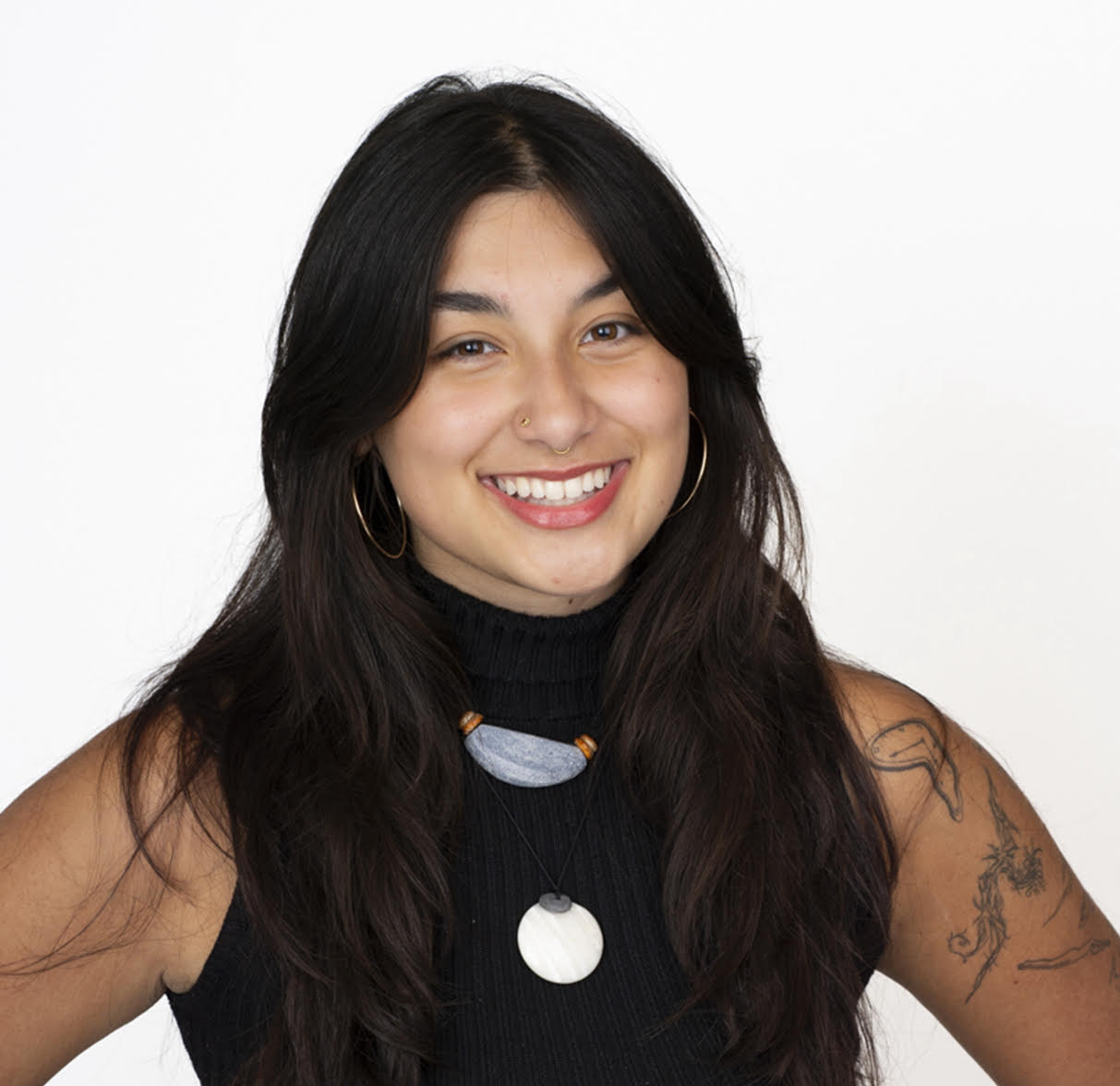
Lula Blas Fox (Familian Eka, Balaku, Malåte’) is a CHamoru undergraduate student at Northwestern University who is currently writing her senior honors thesis for the anthropology department about CHamoru archaeology and heritage preservation on the island of Guåhan (Guam). She is a student organizer in the Native American and Indigenous Student Alliance and the Asian Pacific American Coalition. Outside of school, Lula loves ceramics, fiber arts, learning fino’ CHamoru, and spending time with her family.
Jessica Fremland, Postdoctoral Research Associate in American Studies, Mellon Gateway Postdoctoral Fellow, Brown University
 Jessica Fremland (she/her; Sisseton Wahpeton Dakota) is a postdoctoral fellow at Brown University in the American Studies Department. Her research analyzes the gendered forms of settler colonial carcerality enveloping Native women in boarding schools, activist spaces, and everyday geographies. Her research highlights the use of Indigenous aesthetic practices such as dance, sound, crafting, and letter-writing as methods of strategic sabotage and refusal in the face of settler colonialism and all its disciplinary forms. Jessica draws especially on the fields of Black and Indigenous feminisms to not only document and map these moments of refusal through critical archival and ethnographic research, but to imagine and cultivate alternative possibilities in her own writing and performances of spoken word poetry.
Stephanie Fryberg, James E. Johnson Professor of Psychology, Director, CNAIR and RISE
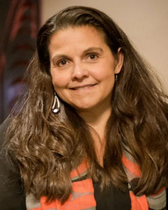 Dr. Stephanie A. Fryberg, a member of the Tulalip Tribes of Washington State is a Professor of Psychology at Northwestern University. As a social and cultural psychologist, her research focuses on how social representations of race, culture, and social class influence the development of self, psychological well-being, physical health, and educational attainment. In addition to publishing articles in leading academic journals, Dr. Fryberg provided testimony to the U.S. Senate Committee on Indian Affairs, received the Society for the Psychological Study of Social Issues Early Career Award, and was inducted into Stanford University’s Multicultural Alumni Hall of Fame. She is also the Director of The Research for Indigenous Social Action and Equity.
Jennifer Gauthier, Director, Sustainable Development Institute, College of Menominee Nation

Jennifer K. Gauthier (Menominee) is the Director of the Sustainable Development Institute at the College of Menominee Nation, a role in which she leads efforts to integrate Indigenous knowledge, cultural integrity, and sustainability into education, research, and community outreach. As an enrolled member of the Menominee Nation, she draws on her heritage and values to guide her work, especially through the Menominee Theoretical Model of Sustainability. Educated at the University of Wisconsin–Madison (B.A. in Political Science) and the University of Wisconsin–Oshkosh (Master of Public Administration), Jennifer brings both academic rigor and lived experience to her leadership. Her professional journey includes years in tribal government, and extensive work with UW‑Extension where she focused on local government planning, health‑oriented community development, and Indigenous food sovereignty. In her current capacity she also serves as adjunct faculty for the College of Menominee Nation. Beyond her institutional roles, Jennifer is deeply invested in cultural revival and community arts. She is a Menominee language learner, an artisan seamstress and beader, an aspiring weaver, a gardener, and harvester—practices that inform and enrich her view of sustainable community development.
Noelle Garcia, Feminist-in-Residence, The Women's Center
 Based in the Chicago metropolitan area, Noelle Garcia is an artist who focuses on themes of identity, family history and recovered narratives in her work. She is an North American Indigenous artist from the Klamath, Modoc and Paiute tribes from Oregon and Nevada. Her multidisciplinary practice utilizes various research methods in order to inform her media and techniques. She earned her Bachelor of Fine Arts from the School of the Art Institute of Chicago, and her Master of Fine Arts from the University of Nevada Las Vegas. Her work has been exhibited in galleries and institutions across the United States. Garcia has earned awards and fellowships at various institutions such as the Smithsonian’s National Museum of the American Indian, the American Indian Graduate Center, the Nevada Arts Council, the Illinois Arts Council Agency, and the Center for Native Futures. Noelle has held residencies at multiple organizations such as ACRE, Ox-Bow, Hyde Park Art Center, Ucross, the Center for Native Futures and Northwestern University. Additionally, Noelle has published multiple articles and illustrations in publications such as First American Art, American Quarterly, Arts Everywhere Musagetes, and various comic books.
Aaron Golding, Senior Program Administrator, School of Education and Social Policy
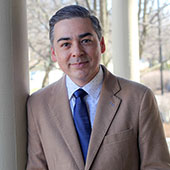
Aaron Golding is an Onöndowa'ga:' (Seneca) storyteller, writer, and educator. He works in the School of Education and Social Policy at Northwestern University, where, in addition to supporting Indigenous students on campus, he facilitates professional development opportunities that disrupt myths and stereotypes related to Native peoples, challenging educators to center Native sovereignty, first voice, and contemporary experiences in their classrooms. He serves as co-chair of the Education Committee of the Chicago American Indian Community Collaborative, a collective leading statewide advocacy and initiatives to support Native students and families.
Jasmine Gurneau, Director, Native American and Indigenous Affairs
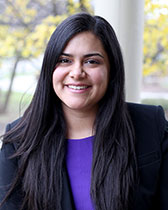
Jasmine Gurneau (Oneida/Menominee) serves as the Director of Native American and Indigenous Affairs in the Office of the Provost at Northwestern University where she leads university-wide strategies to foster inclusion for Native American and Indigenous students, faculty, staff, and alumni. Her role centers on building meaningful and sustainable partnerships with Native Nations and communities while serving as a key thought leader and advocate on campus. From Chicago, Illinois, Jasmine earned a Bachelor of Arts in Sociology from DePaul University and a Master of Arts in Learning Sciences from Northwestern University. She currently serves as the Board President for the Chicago American Indian Community Collaborative. She previously served two terms as a Community Representative of the Citywide American Indian Education Council for Chicago Public Schools and was a 2015 Fellow with Cultivate: Women of Color Leadership program.
Dana Hedgpeth, Journalist, Washington Post, IJA-Medill Milestone Achievement Award Recipient
 Dana Hedgpeth is an award-winning Native American journalist with more than 27 years at The Washington Post. She has covered a wide range of topics, focusing on Native American communities and their often overlooked history. Most recently, she led an 18-month investigation that was a revelatory reveal of the sexual abuse and deaths of Native American students at government- and church-run boarding schools. The series won six major national awards and helped prompt historic formal apologies from President Biden and a leading Catholic bishops’ group. Throughout her career, she has also reported on the Washington region’s transportation system, Pentagon spending, the local economy, government, weird animal tales, courts and crime. An enrolled member of the Haliwa-Saponi Tribe of North Carolina, the second-largest tribe in the state, she is also a member of the Indigenous Journalists Association. In 2025, she received the Indigenous Journalist–Medill Milestone Achievement Award, honoring those whose work has made a lasting, positive impact on journalism and Native American communities. At The Post, she is the only Native American journalist in the 900-person newsroom and one of the few in mainstream media. She lives in Washington, D.C., with her husband and two children and participates in competitive powwow dancing as a jingle dress dancer.
Nathalie Kanoelani Takiko Jones, PhD Candidate, Astronomy

Nathalie Kanoelani Takiko Jones (she/her) is a PhD Candidate at Northwestern University studying exoplanet astronomy. She is part Kanaka Maoli (Native Hawaiian) and is from Honolulu, HI. Nathalie attended undergrad at Bard College in the Hudson Valley, NY with a major in Physics. After a gap year in Philadelphia, PA, she moved to the Chicago area to start her graduate studies at Northwestern. Nathalie works with Dr. Jason Wang on directly imaging gas giant exoplanets. She also serves as the president of the Indigenous Graduate Student Collective at Northwestern and is a current Board of Visitors Fellow at the Center for Interdisciplinary Exploration and Research in Astrophysics (CIERA). For more info, https://nathaliekt.github.io/.
Stephanie Lumsden, (Hupa) Assistant Professor of Native American Studies, University of California, Davis

Stephanie A. Lumsden is a member of the Hoopa Valley Tribe and an assistant professor of Native American studies at UC Davis. Her research examines the relationship between Indigenous dispossession and the development of the carceral settler state in northwestern California. Stephanie is currently serving on the California Indian Studies and Scholars Association (CISSA) Council of Leadership and is a member of the group CA NDNs for Palestinian Liberation.
Michelle Manno, Associate Provost for Community Enrichment
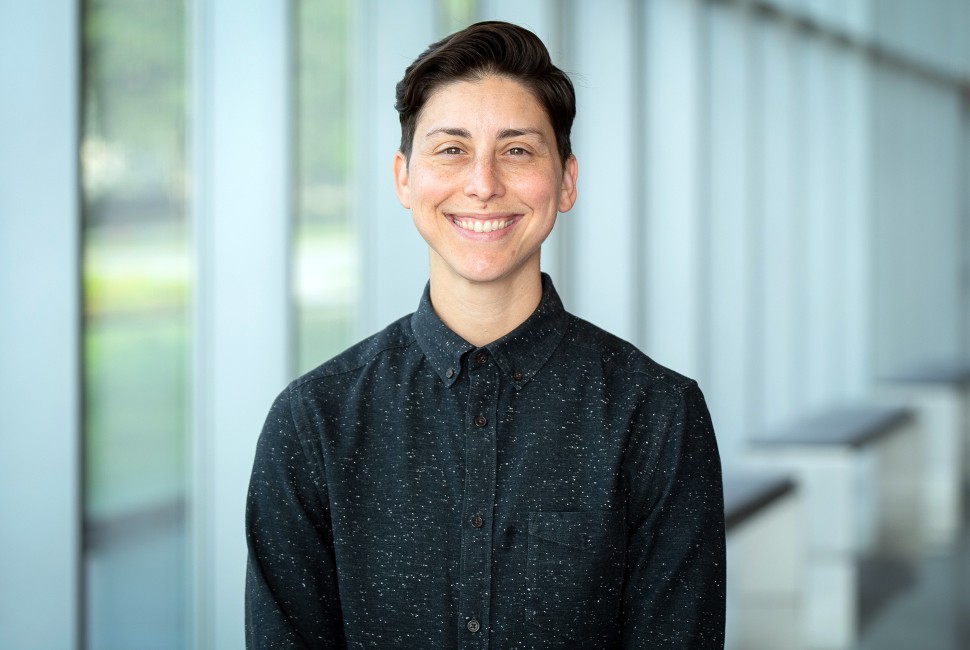
In this role, Manno oversees the Office of Community Enrichment including The Women’s Center, Native American and Indigenous Affairs, and the Center for Civic Engagement. During her time at Northwestern, Manno has overseen training, guidance and educational opportunities for University community members; created new initiatives around conflict and dialogue; and facilitated collaboration with University partners and external stakeholders. Before joining Northwestern, Manno served as assistant vice chancellor of diversity initiatives and as faculty affiliate in the Department of Sociology at the University of Illinois Chicago. Manno earned her Ph.D. in Sociology from Emory University. She is the author of Denied: Women, Sports, and the Contradictions of Identity (NYU Press).
Heather Menefee, PhD Candidate, History
Heather Menefee is a PhD candidate in Native American and U.S. History at Northwestern University, where she is also a CNAIR Advisory Council member and a Presidential Fellow. As a non-Native historian, Heather is committed to supporting the return of Dakota land and the health of the Dakota language. At NU, Heather works with the Taskforce on Indigenous and Endangered Languages to remove inequitable policies and support language reclamation. She was previously the Teaching Assistant for the Dakota Language Program at the University of Minnesota and a staff member at Dakhóta Iápi Okhódakičh’iye. Next year, she will be a Postdoctoral Scholar in the Civil War Era at Penn State. Heather's family's donkey (pictured) is named Jackson and lives in Georgia, where he protects cows from coyotes.
Solo Miner, Social Psychology PhD, Psychology Department
Solo (they/them) is an enrolled member of the Little Traverse Bay Bands of Odawa Indians and a descendant of the Oglala Lakota Nation. Solo graduated from the University of Michigan with a B.A. in Communications and Media Studies and English. Their primary research interests are understanding the intersections of social representations, culture, and identity for Native Peoples. They are a first year student in the Social Psychology PhD program.
Renya Ramirez, Professor of Anthropology, University of California, Santa Cruz

Renya K. Ramirez is an enrolled member of the Winnebago Tribe of Nebraska. She is a professor of Anthropology at UC Santa Cruz. Her books include Native Hubs (Duke UP, 2007), and Standing Up to Colonial Power (University of Nebraska Press, 2018), She is finishing up the Critical Mission Studies book anthology(UC Press), and Native Women and the Alcatraz Occupation book manuscript. Her research interests are Native feminisms, settler colonialism, family/tribal history and ethnography, Red Power, critical mission studies, Native women’s history and art history, rematriation, and urban Native Americans.
Alex Red Corn (Ed.D), Acting President, Haskell University

 Alex Red Corn (Ed.D) is a citizen of the Osage Nation, where he is a member of the (Gentle Sky/Peacekeeper) clan, with family roots in the ͘ district near Pawhuska, Oklahoma. Dr. Red Corn is serving as Acting Haskell President through an Intergovernmental Personnel Agreement with the Bureau of Indian Education and the University of Kansas. Dr. Red Corn joined the University of Kansas in Summer of 2024, where he was serving as Director and Associate Professor of Indigenous Studies, as well as Associate Vice Chancellor for the newly established Office of Sovereign Partnerships and Indigenous Initiatives. He received his doctorate in Educational Leadership from Kansas State University where he served as junior faculty with research, teaching, and service focusing on American Indian educational systems. He also served as Executive Director of the Kansas Association for Native American Education (KANAE), and in 2022 he become the Chair of the new Kansas Advisory Council for Indigenous Education (KACIE).
Krystal Tsosie, Assistant Professor, School of Life Sciences, Arizona State University

Dr. Krystal Tsosie (Diné/Navajo Nation) is a geneticist, bioethicist, and Assistant Professor at Arizona State University whose work bridges genomics, Indigenous studies, and the humanities. She co-founded the Native BioData Consortium, the first Indigenous-led biobank in the United States, advancing new models of data sovereignty and ethical governance. Her research spans precision health, biodiversity genomics, and ancient DNA, grounded in questions of power, consent, and historical accountability. Through interdisciplinary scholarship and public engagement, she advances a restorative vision of science—one that centers Indigenous knowledge systems and rethinks how research can serve communities rather than extract from them. An internationally recognized leader at the intersection of science and society, she has advised the National Academies of Sciences, Engineering, and Medicine, the World Health Organization, and the American Society of Human Genetics. Her work is widely featured in international media, shaping global conversations on ethics, power, and the future of knowledge production.
Eve Tuck, Professor of Indigenous Studies and James Weldon Johnson Professor at Steinhardt, Dept of Applied Statistics, Social Sciences & Humanities, and the Gallatin School of Individualized Study, NYU

Eve Tuck is the founding director of the new Provostial Center for Indigenous Studies at NYU, called the Center for Collaborative Indigenous Research with Communities and Lands (Center CIRCL). Tuck is Unangax̂ and is an enrolled member of the Aleut Community of St. Paul Island, Alaska. She grew up outside of her community, living in Pennsylvania as a child, and New York City as a young adult. She earned a PhD in Urban Education from The Graduate Center, The City University of New York in 2008. Tuck's work is on collaborative Indigenous research, Indigenous feminisms, and land education. As a whole, her research focuses on how Indigenous social thought can be engaged to create more fair and just social policy, more meaningful social movements, and robust approaches to decolonization. Tuck also holds an appointment as Professor at the Ontario Institute for Studies in Education (OISE), University of Toronto. She makes a podcast with graduate students at OISE, University of Toronto, called The Henceforward, on relationships between Indigenous and Black communities on Turtle Island.
Joe Yracheta, VP and Science Director, NativeBio Consortium
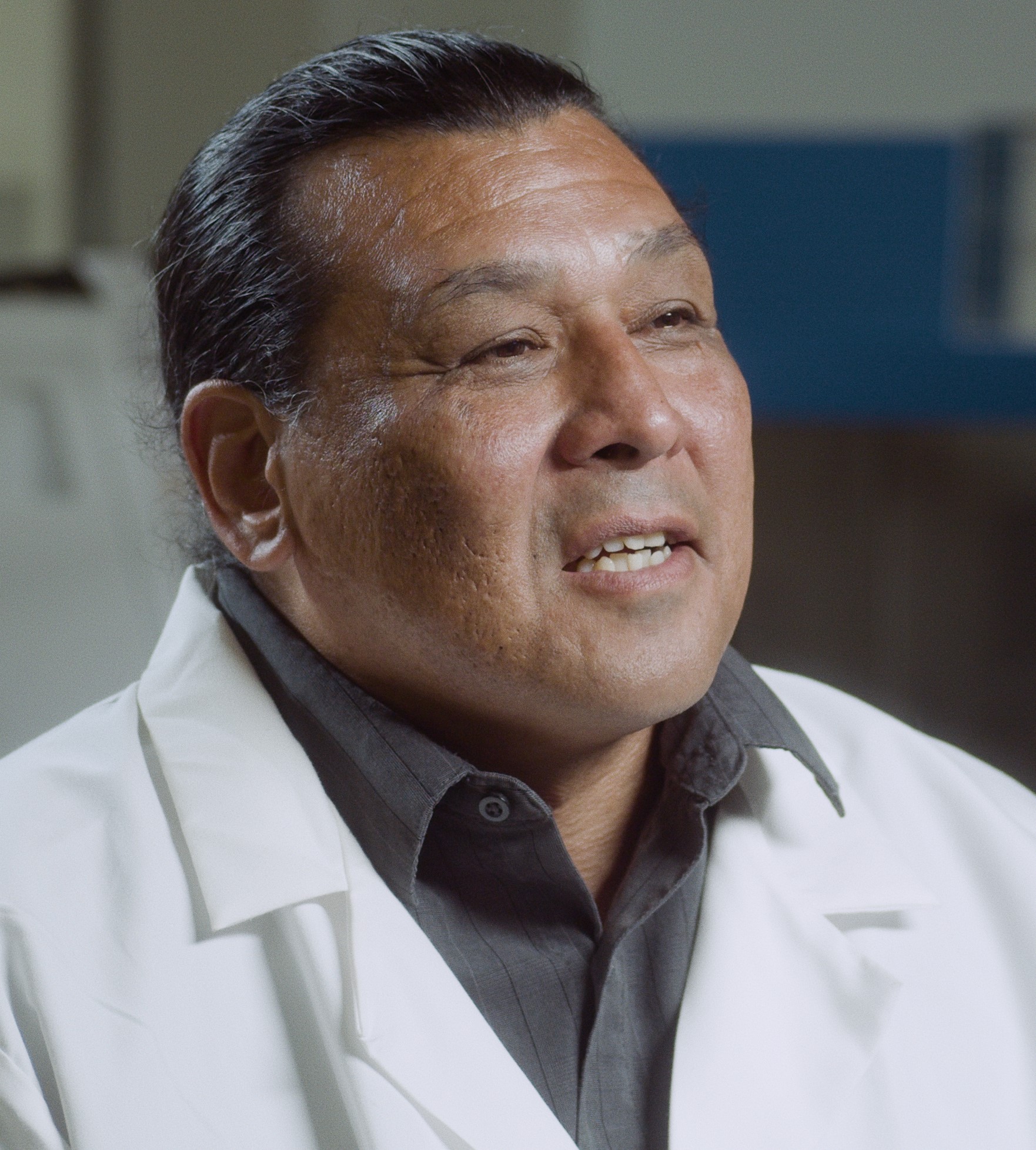
Joseph M. Yracheta is an Amerindigenous scientist of P’urhepecha and Raramuri heritage and a leading voice in Indigenous data sovereignty. He serves at the Native BioData Consortium, the first Indigenous-governed nonprofit “safe‑harbor” for biological samples and data, located within the Cheyenne River Lakota Nation in South Dakota. A scientist since 1990, Yracheta began his career as a bench biotechnician and has since worked across numerous biomedical disciplines. He earned his master’s in Pharmaceutics and Bioethics from the University of Washington and is completing a DrPH in Environmental Health and Engineering at Johns Hopkins. Yracheta’s work spans biomedical business management, the design of sovereign Indigenous data systems, and consulting on legal and ethical challenges emerging from machine learning and artificial intelligence. He addresses Indigenous health disparities through genomics, epidemiology, and improved data-driven interventions, while also contributing to global decolonization efforts. As an educator, he develops curricula that help funders and researchers implement CARE and OCAP™ principles in partnership with Indigenous communities. With more than 60 publications and extensive international collaborations, Yracheta advocates for securing Indigenous data as a foundation for cultural and economic sustainability—an essential expression of the “survivance” envisioned by Anishinaabe scholar Gerald Vizenor.